
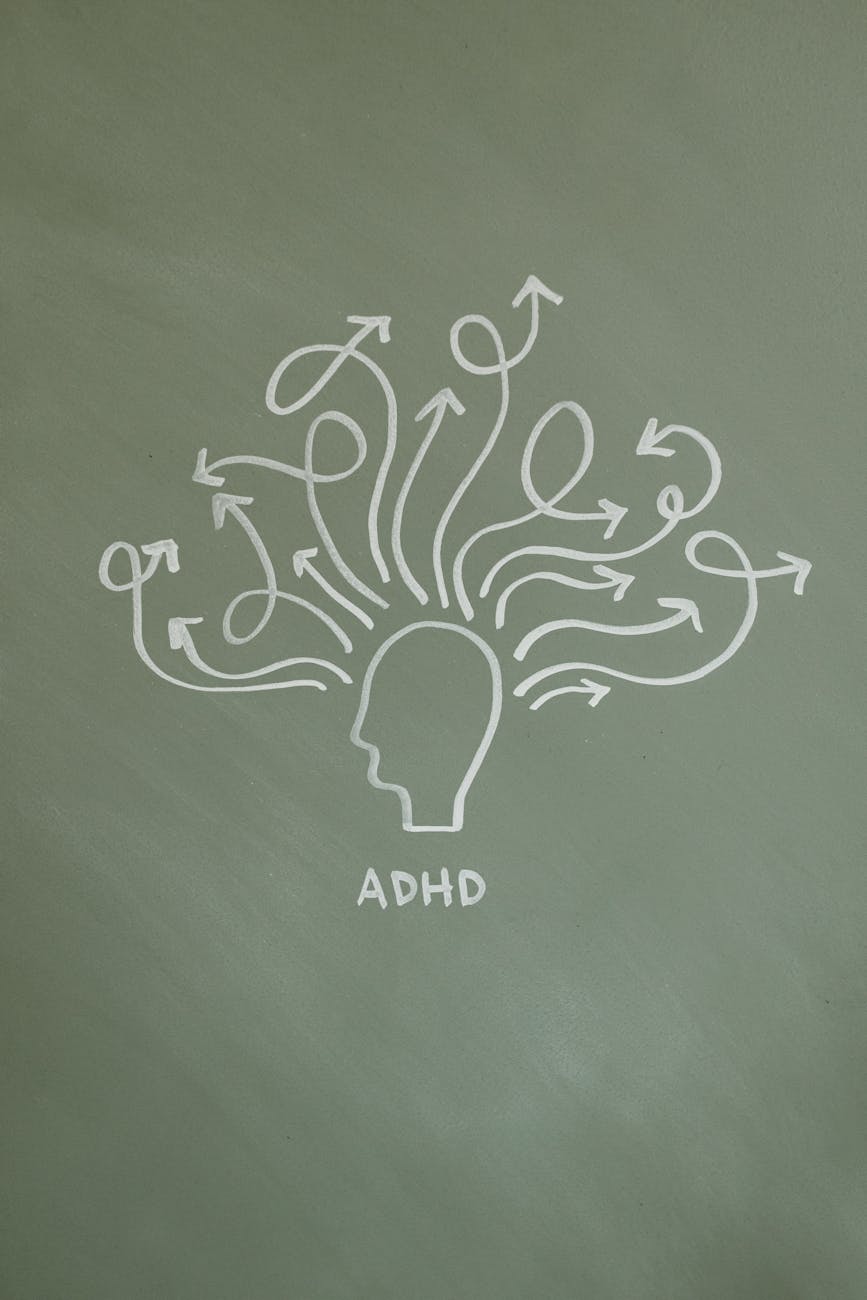
You walked into the kitchen to put away your groceries. In the process, you noticed that your cupboard is a little messy, so you started rearranging. You realized you needed something from your bedroom and off you went, but you found another task that needed your attention. By the end of the day, there were more unfinished projects than you intended.
This situation was very familiar. In fact, you have been plagued with a trail of unfinished projects or procrastination for most of your life. You assumed that this was just you. Over the years, you found ways to combat your forgetfulness, but it remained a nagging problem.
Adult Deficit/Hyperactivity Disorder (ADHD)
ADHD is often associated with children, and it was believed that as they age, their symptoms decrease. However, this was not the case for many adults, some of whom may not even know they were experiencing ADHD symptoms. “ADHD is now recognized as a pervasive neurodevelopmental condition impacting millions of adults globally.” Huntingtonpsych.com
There are three components of ADHD: Inattentive, Hyperactivity/Impulsivity, and Combination. The American Academy of Family Physicians (AAFP) listed the symptoms of the inattentive and hyperactive types.
Life Impact
Can you identify five or more of those symptoms? Maybe it’s someone you know. ADHD symptoms can disrupt a person’s life depending on the severity. Research shows that people with ADHD also struggle with other mental health disorders like anxiety and depression. In childhood, the symptoms can have a significant impact on education and social connection which continue into adulthood.
The ‘weird kid’ can become the dysfunctional adult who was labeled unreliable. The person may find it difficult to maintain employment or progress in a career. To manage the symptoms, s/he may resort to substance abuse. As the pressures of adult life increase, it can be overwhelming to manage daily life, or it can take significant effort to stay on track, which can impact one’s self-esteem.
The Next Step
Many people with ADHD were never diagnosed. Others who were diagnosed were not treated, and some discontinued their treatment. Taking the first step can be difficult because it acknowledges that you need help beyond your control. Talk to your primary care physician or a mental health provider who can complete a formal evaluation and address any other mental health symptoms.
There are various pharmacological options for those seeking treatment. If you choose to forgo medications, then a mental health provider can work with you to implement behavioral interventions to assist in managing your symptoms.
It’s important to be informed about your mental health so you can make the best decisions for your overall wellness.
Self-assessment tools are available on websites like ADHD Screeners and Quality of Life Assessments and Adult ADHD Self-Report Scale: Symptom Checklist
Listen to Podcast: Balance & Bloom with Francine and Claudia S2. Ep.16 – Adult ADHD
References
American Academy of Family Physicians. (2026). Adult ADHD assessment and diagnosis. DSM-5 Diagnostic Criteria for ADHD
American Academy of Family Physicians. (2021). ADHD screeners and quality of life assessment. https://www.aafp.org/dam/AAFP/documents/patient_care/adhd_toolkit/adhd19-assessment-screeners.pdf
American Psychiatric Association. (2025). ADHD in adults: New research highlights trends and challenges. Psychiatry.org – ADHD in Adults: New Research Highlights Trends and Challenges
American Psychological Association. Adult ADHD self-report sale (ASRS-v1.1) symptom checklist. https://www.apaservices.org/practice/reimbursement/health-registry/self-reporting-sympton-scale.pdf
Rohde, L.A., Buitelaar, J.K., Gerlach, M., & Faraone, S.V. (2019). The world federation of ADHD guide. The World Federation of ADHD
The Rise of Adult ADHD: 50+ Key Statistics for 2025-2026. 50+ Essential Adult ADHD Statistics (2025-2026 Data) | Pasadena, CA | Huntington Psychological Services
 Charé
Charé 